About Me

- Donna
- The HC Wellness Center offers both traditional and alternative therapies to assist clients in achieving optimal health, wellness and balance. Featuring as its principle service Colon Hydrotherapy, formerly seen only at fine spas and destination resorts, HC Wellness Center & Spa is one of the first to offer this valuable wellness service to the Charlotte Metropolitan and surrounding areas. HC Wellness Center & Spa is a premier North Carolina spa providing the most luxurious, and beneficial wellness and beauty services available to the Charlotte Metropolitan and surrounding areas. Established in 2004 with the vision of combining traditional spa treatments, that promote relaxation and well being, with the most advanced skin, body and wellness services. The HC Spa supplies a moment of luxury for your body, mind and spirit. Here nature and science meet harmoniously as the finest massage, skin care and spa treatments await you.
Saturday, March 4, 2017
Vitamin D Is More Effective Than Flu Vaccine, Study Says
Vitamin D Is More Effective Than Flu Vaccine, Study Says
By Dr. Mercola
Dr. John Cannell, founder of the Vitamin D Council, was one of the first to introduce the idea that vitamin D deficiency may actually be an underlying CAUSE of influenza.
His hypothesis1 was initially published in the journal Epidemiology and Infection in 2006.2 It was subsequently followed up with another study published in the Virology Journal in 2008.3
The following year, the largest nationally representative study4 of its kind to date discovered that people with the lowest vitamin D levels indeed reported having significantly more colds or cases of the flu. In conclusion, lead author Dr. Adit Ginde stated:
"The findings of our study support an important role for vitamin D in prevention of common respiratory infections, such as colds and the flu. Individuals with common lung diseases, such as asthma or emphysema, may be particularly susceptible to respiratory infections from vitamin D deficiency."
Vitamin D Works Better Than Flu Vaccine If Your Levels Are Low
Since then, a number of studies have come to similar conclusions. Most recently, a scientific review5,6 of 25 randomized controlled trials confirmed that vitamin D supplementation boosts immunity and cuts rates of cold and flu.Overall, the studies included nearly 11,000 individuals from more than a dozen countries. As reported by Time Magazine:7
"… [P]eople who took daily or weekly vitamin D supplements were less likely to report acute respiratory infections, like influenza or the common cold, than those who did not …
For people with the most significant vitamin D deficiencies (blood levels below 10 [ng/mL]), taking a supplement cut their risk of respiratory infection in half.
People with higher vitamin D levels also saw a small reduction in risk: about 10 percent, which is about equal to the protective effect of the injectable flu vaccine, the researchers say."
Like Cannell before them, the researchers believe vitamin D offers protection by increasing antimicrobial peptides in your lungs, and that "[t]his may be one reason why colds and flus are most common in the winter, when sunlight exposure (and therefore the body's natural vitamin D production) is at its lowest …"8
According to this international research team, vitamin D supplementation could prevent more than 3.25 million cases of cold and flu each year in the U.K. alone.9 Another statistic showing vitamin D is a more effective strategy than flu vaccine is the "number needed to treat" (NNT).
Overall, one person would be spared from influenza for every 33 people taking a vitamin D supplement (NNT = 33), whereas 40 people have to receive the flu vaccine in order to prevent one case of the flu (NNT = 40).
Among those with severe vitamin D deficiency at baseline, the NNT was 4. In other words, if you're vitamin D deficient to begin with, vitamin D supplementation is 10 times more effective than the flu vaccine.
Optimizing Vitamin D May Be Your Best Defense Against Influenza
In my view, optimizing your vitamin D levels is one of the absolute best flu-prevention and optimal health strategies available. Your diet also plays a significant role of course, as it lays the foundation for good immune function.A high-sugar diet is a sure-fire way to diminish your body's innate ability to fight off infections of all kinds by radically impairing the functioning of your immune system.
However, I do not agree that fortifying more processed foods with vitamin D is the best solution, although I realize it could potentially have a more widespread impact among people who remain unaware of the beneficial health effects of sunlight in general.
I believe sensible sun exposure is the ideal way to optimize your vitamin D. Taking a vitamin D3 supplement is only recommended in cases when you simply cannot obtain sufficient amounts of sensible sun exposure.
It's also important to point out that, contrary to what's reported by most mainstream media, including NPR report above, most people cannot optimize their vitamin D levels by getting the recommended 600 IUs of vitamin D from fortified foods. The dose you need really depends on your current blood level of vitamin D.
If it's very low, you may need 8,000 to 10,000 IUs of vitamin D3 per day in order to reach and maintain a clinically relevant level of 45 to 60 nanograms per milliliter (ng/mL). The only way to know how much you need is to get tested at least once or twice each year.
If you've been supplementing for some time and your levels are still below 45 ng/mL, you then know you have to increase your dose further. If using an oral supplement, also make sure to boost your vitamin K2 and magnesium intake, as these nutrients help optimize vitamin D levels.
Other Studies Supporting Link Between Vitamin D Deficiency and Influenza
In a study published in 2010,10 researchers investigated the effect of vitamin D on the incidence of seasonal influenza A in schoolchildren. The randomized, double blind, placebo-controlled study included 430 children, half of which were given 1,200 IUs of vitamin D3 per day while the other half received a placebo.Overall, children in the treatment group were 42 percent less likely to come down with the flu. According to the authors: "This study suggests that vitamin D3 supplementation during the winter may reduce the incidence of influenza A, especially in specific subgroups of schoolchildren."
Another study11 published that same year concluded that infection-fighting T-cells need help from vitamin D in order to activate. This is yet another mechanism that helps explain why vitamin D is so effective against infections.
When a T cell recognizes foreign invaders like bacteria or viruses, it sends activating signals to the vitamin D receptor (VDR) gene.
The VDR gene then starts producing a protein that binds vitamin D in the T cell. A downstream effect of this is PLC-gamma1 protein production, which subsequently enables the T cell to fight the infection. At the time, lead researcher Carsten Geisler told Food Consumer:12
"When a T cell is exposed to a foreign pathogen, it extends a signaling device or "antenna" known as a vitamin D receptor, with which it searches for vitamin D. This means the T cell must have vitamin D or activation of the cell will cease. If the T cells cannot find enough vitamin D in the blood, they won't even begin to mobilize."
With that understanding, it's no wonder flu shots don't work. Flu vaccines do absolutely nothing to address the underlying problem of vitamin D deficiency, which is effectively hindering your immune system from working properly.
In fact, flu vaccines tend to deteriorate your immune function, and their side effects can be significant.
'Gold Standard' Studies Ignored by Mainstream Media
The gold standard of scientific analysis, the so-called Cochrane Database Review, has also issued several reports between 2006 and 2012, all of which decimate the claim that flu vaccinations are the most effective prevention method available. In 2010, Cochrane published the following bombshell conclusion, which was completely ignored by mainstream media:13"Influenza vaccines have a modest effect in reducing influenza symptoms and working days lost. There is no evidence that they affect complications, such as pneumonia, or transmission. WARNING: This review includes 15 out of 36 trials funded by industry (four had no funding declaration).
An earlier systematic review of 274 influenza vaccine studies published up to 2007 found industry funded studies were published in more prestigious journals and cited more than other studies independently from methodological quality and size. Studies funded from public sources were significantly less likely to report conclusions favorable to the vaccines …"
So, despite the fact that 15 of the 36 studies included were biased by industry interests, they still couldn't come up with evidence supporting the conventional claim that flu vaccines are the best and most effective prevention available against influenza!
Scientific Reviews Show Vaccinating Children and Elderly Is Ineffective
Cochrane has issued several reports addressing the effectiveness of flu vaccines on infants and the elderly — two groups that tend to be the most targeted by flu vaccine advertising — and all have had negative findings. For children:1. A large-scale, systematic review14 of 51 studies, published in the Cochrane Database of Systematic Reviews in 2006, found no evidence that the flu vaccine is any more effective than a placebo in children under two. The studies involved 260,000 children, age 6 to 23 months.
2. In 2008, another Cochrane review15 again concluded that "little evidence is available" that the flu vaccine is effective for children under the age of two. Even more disturbingly, the authors stated that:
"It was surprising to find only one study of inactivated vaccine in children under two years, given current recommendations to vaccinate healthy children from six months old in the USA and Canada. If immunization in children is to be recommended as a public health policy, large-scale studies assessing important outcomes and directly comparing vaccine types are urgently required."
3. In a 2012 review,16 Cochrane concluded that "in children aged from two years, nasal spray vaccines made from weakened influenza viruses were better at preventing illness caused by the influenza virus than injected vaccines made from the killed virus. Neither type was particularly good at preventing "flu-like illness" caused by other types of viruses. In children under the age of two, the efficacy of inactivated vaccine was similar to placebo."
The available evidence with regards to protecting the elderly is equally abysmal.
4. In 2010, Cochrane concluded that:17 "The available evidence is of poor quality and provides no guidance regarding the safety, efficacy or effectiveness of influenza vaccines for people aged 65 years or older."
5. Cochrane also reviewed whether or not vaccinating health care workers can help protect the elderly patients with whom they work. In conclusion, the authors stated that:18 "[T]here is no evidence that vaccinating health care workers prevents influenza in elderly residents in long-term care facilities."
Annual Flu Vaccinations May Raise Risk of More Serious Infections
Other recent studies have shown that with each successive annual flu vaccination, the protection afforded by the vaccine appears to diminish.19, 20 Research published in 2014 concluded that vaccine-induced protection against influenza was greatest among those who had NOT received a flu shot in the previous five years.21 The flu vaccine may also increase your risk of contracting other, more serious influenza infections.- Data shows people who received the seasonal flu vaccine in 2008 had twice the risk of getting the H1N1 "swine flu" compared to those who didn't receive a flu shot.22
- Compared to children who do not get an annual flu vaccine, those who receive influenza vaccinations have a three times higher risk of hospitalization due to influenza.23
Independent science reviews have also concluded that influenza vaccine does not appear to prevent influenza-like illness associated with other types of viruses responsible for about 80 percent of all respiratory or gastrointestinal infections during any given flu season.27,28,29,30
Other Foods and Supplements That Send Pathogens Packin'
Besides vitamin D, there are a number of other foods and supplements that can be beneficial for colds and influenza, including the following:| Garlic:31 Garlic has natural antiviral,
antibiotic and antifungal activity and has long been hailed for its immune
boosting effects. The Cochrane Database, which has repeatedly demonstrated that the science in support of the flu vaccine is flimsy at best, has also reviewed studies on alternatives, including garlic.32 Unfortunately, such research is harder to come by, as there's no financial incentive driving it. Still, in the singular study identified by the Cochrane group, those who took garlic daily for three months had fewer colds than those who took a placebo, and, when they did come down with a cold, the duration of illness was shorter — an average of 4.5 days compared to 5.5 days for the placebo group. While this may not seem overly impressive, it's still better than the results achieved by the flu drug Tamiflu! |
Zinc: A Cochrane Database Review of the medical research
on zinc
found that when taken within one day of the first symptoms, zinc can cut down
the time you have a cold by about 24 hours. Zinc was also found to greatly reduce the severity of symptoms. Zinc was not recommended for anyone with an underlying health condition, like lowered immune function, asthma or chronic illness. I do not recommend taking more than 50 mg a day, and I do not recommend taking zinc on a daily basis for preventive purposes as you could easily develop a copper imbalance that way. |
| Vitamin C: A very potent antioxidant; use a natural form
such as acerola, which contains associated micronutrients. You can take several grams every hour (use the liposomal form so you don't get loose stools), till you are better. I never travel without a bottle of our liposomal C. |
A tea made from a combination of elderflower, yarrow, boneset, linden, peppermint and ginger; drink it hot and often for combating a cold or flu. It causes you to sweat, which is helpful for eradicating a virus from your system. |
| Oregano Oil: The higher the carvacrol concentration, the more effective it is. Carvacrol is the most active antimicrobial agent in oregano oil. | Medicinal mushrooms, such as shiitake, reishi and turkey tail. |
| Propolis: A bee resin and one of the most broad-spectrum antimicrobial compounds in the world; propolis is also the richest source of caffeic acid and apigenin, two very important compounds that aid in immune response. | Olive leaf extract is widely known as a natural, non-toxic immune system builder. |
If you have any questions or need assistance please call 704-823-1577 or text. Check out our web site http://www.hcwellnesscenterandspa.com/
Monday, February 27, 2017
Surprise Findings Regarding Childhood Respiratory Allergies
Surprise Findings Regarding Childhood Respiratory Allergies

Midwest: Ohio, Illinois, Indiana, Michigan, Wisconsin, Minnesota, Iowa, Missouri, North Dakota, South Dakota, Nebraska, Kansas
West: Montana, Idaho, Wyoming, Colorado, New Mexico, Arizona, Utah, Nevada, Washington, Oregon, California, Alaska, Hawaii
South: Delaware, Maryland, District of Columbia, Virginia, West Virginia, North Carolina, South Carolina, Georgia, Florida, Kentucky, Tennessee, Alabama, Mississippi, West South Central, Arkansas, Louisiana, Oklahoma, Texas.
Region
As you can see by viewing the infographic above, there are some slight differences in respiratory and hay fever percentages by region. The South takes the prize for the highest percentage of children with respiratory allergies and hay fever symptoms.Gender
The child’s gender is also a factor. In every region, boys (between the ages of zero and seventeen) showed a higher percentage of hay fever/respiratory allergy symptoms than girls. In the most recent study, 2011 – 2013, boys in the Northeast showed symptoms of hay fever and respiratory allergies 15.7% of the time while girls showed symptoms 13.8% of the time. The gap of approximately two percent takes place in every region.Other Factors
According to the CDC, race, family income level, and a parent’s educational are all factors when it comes to allergies.“Hispanic children had a lower prevalence of food allergy, skin allergy, and respiratory allergy compared with children of other race or ethnicities. Non-Hispanic black children were more likely to have skin allergies and less likely to have respiratory allergies compared with non-Hispanic white children.
Food and respiratory allergy prevalence increased with income level. Children with family income equal to or greater than 200% of the poverty level had the highest prevalence rates. White children were more likely to have had hay fever (9%) than black children (7%). + Black children were more likely to have had skin allergies (19%) than Asian children (11%) or white children (10%).
Children with a parent who had education beyond a high school diploma were more likely to have had hay fever, respiratory allergies, food allergies, and skin allergies than children with a parent who had less than a high school diploma.
Overall health is also a factor when it comes to allergies. “Children in fair or poor health were two to three times as likely to have had respiratory allergies (30%), food allergies (18%), and skin allergies (28%) as children in excellent or very good health (9%, 5%, and 11%).”
Allergy Types
Of the three major allergy types (food, skin, and respiratory), the most common is respiratory. Nearly one in 5 children from the age of 10 – 17 reported a respiratory allergy condition within a one-year period.
Fast Facts
Interesting fast facts (also from the CDC):- Number with reported hay fever in the past 12 months: 6.6 million
- Percent with reported hay fever in the past 12 months: 9.0%
- Number with reported respiratory allergies in the past 12 months: 7.8 million
- Percent with reported respiratory allergies in the past 12 months: 10.6%
- Number with reported food allergies in the past 12 months: 4.1 million
- Percent with reported food allergies in the past 12 months: 5.6%
- Number with reported skin allergies in the past 12 months: 8.8 million
- Percent with reported skin allergies in the past 12 months: 12.0%
Benefits:
- Supports the body in times of respiratory stress.
- Supports the body’s efforts to maintain a healthy mucous membrane.
- Supports free breathing and may help reduce unpleasant symptoms associated with irritants.
How It Works:
HistaBlock provides nutrients that support healthy respiratory function as the body battles irritants, pollutants and toxins. Stinging nettle provides well-known support against seasonal airborne substances. This formula provides antioxidant strength to help stabilize mast cells.The antioxidant quercetin has been used for its reputed effects in supporting the respiratory system. Quercetin may help stabilize cells that release compounds when exposed to irritants. Bromelain is an enzyme that works to help reduce the swelling of mucous membranes during times of respiratory stress. Bitter orange contains synephrine, which helps the body support open airways.
Ingredients:
Nettle leaves, quercetin, Bitter orange fruit and bromelain.Thursday, February 23, 2017
The Gut - Brain Connection
 When
working with clients who are victims of emotional imbalances that
include, but are limited to, anxiety, panic, and depression, we work
together to help them balance Wholistically: body, mind and spirit.
Science has demonstrated the importance of cultivating a healthy intestinal ecology known as the – microbiota – those health-enhancing microorganisms in our digestive health - critical inhabitants to achieve wellness.
Research has now validated that the bacteria in your gut can directly affect your behavior, emotions and everything from the ability to lose excess weight to our immune responses. This might be surprising for many, however it’s a critical, and often overlooked factor in treating anxiety. Healing and restoring balance to one’s digestive tract, ideally with the help of a nutritionally-aware health professional like a certified practitioner, can make a huge difference in alleviating symptoms and overcoming imbalances...
Your digestive tract can be damaged by chronic stress, medication use (prescription and over-the-counter), exposure to foods that aren’t “real” food and have been chemically-altered, toxic environmental exposure, toxic dental products/restorations, etc., to name a few. In addition to the biological factors, other factors such as being in an unhealthy relationship, suffering from low self-esteem, struggling with panic attacks over needless worry about little things, all affect your intestinal ecology and therefore manifest throughout your body and mind.
No matter what the underlying issues of your anxiety, panic attacks or depression, experiencing it leaves you feeling isolated, down-right scared and mentally exhausted. When it comes to treating emotional distress, utilizing multiple agents of change is the most beneficial way to experience relief. For example, when treating anxiety, it’s extremely beneficial not only to receive therapy, but also to change your diet, exercise, use positive patterns of self-talk, self-discipline for self-care, introduction of relaxation techniques, and unconditionally understanding that we are what we eat!
Saturday, February 4, 2017
Signs Your Body is TOO ACIDIC...AND...the Health Consequences...
Signs Your Body is TOO ACIDIC...AND...the Health Consequences...
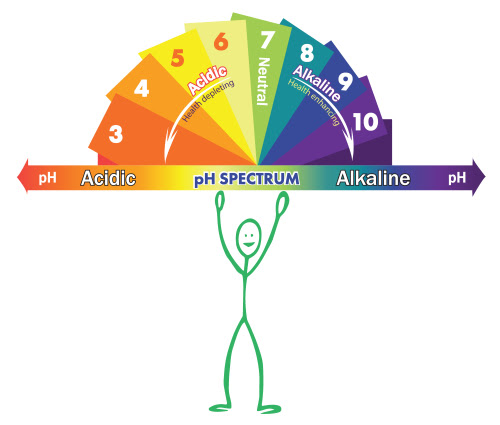 Knowing
and monitoring your urine pH (potential hydrogen) is vital to good
health. A pH level that is below the healthy range means your body is
not doing a good job of ridding your system of acid, therefore, creating
the perfect breeding ground for health-depleting microorganisms to
flourish like viruses, bacteria, yeast, fungus’ and, yes, cancer cells.
The following are common symptoms that indicate your body is too acidic:
- Inability to lose excess weight – regardless of dieting or exercise. This occurs because excess waste product in the form of acid stay stored within the body. It is not being eliminated because the organs of detoxification/elimination – colon, kidneys, lymphatics and skin – are not able to do their job of eliminating toxins. Many of my fibromyalgia clients don’t realize until we consult that the excess acid is being pushed back into the fat tissues and causes the “invisible” pain they experience. In addition, the acidic pH retards weight loss because the acidity acts like a magnet and keeps toxins in fat cells.
- An acidic body will compensate by pulling minerals from your tissues and other organs. One of these minerals is calcium that is necessary for strength and bone health. A low urine pH causes weak bones as their supply of calcium is depleted; fractures occur easily, the reason patients with osteoporosis and osteopenia are asked to avoid acidic foods that deplete calcium (especially beef, caffeine and soft drinks).
- Your bones store calcium, the same as your teeth. A study in the Int’l Journal of Chemical Engineering showed low pH in the mouth caused demineralization of tooth enamel and cause mouth bacteria to escalate production of lactic acid that results in cavities. Also, an acidic mouth may cause sensitivity to foods and drink temperatures as well as gum disorders/diseases like recession that leads to periodontitis and gingivitis.
- An acid body allows hordes of microorganism to invade and multiply therefore triggering the immune responses and creating chronic fatigue – inhibiting your body’s ability to absorb essential nutrients. Poor nutrient absorption affects the body’s abilities to produce hormones and enzymes that produce energy.
- Your skin is the largest organ of absorption AND elimination AND one of the detoxifying organs. When the body is too acidic it becomes prone for bacteria and toxin overload. When this occurs it is usually a result of the liver not being able to eliminate the acidic toxic substances and the skin then compensates by flushing some of them out. When detoxification in this form occurs, it manifests as acne, clogged pores, allergies, rashes and eczema.
- Excessive mucus production is the body’s natural defense mechanism against acid buildup – its attempting to flush the body through nasal passages. If you are a victim of frequent mucus build-up, your body is overloaded with acid. Chronic mucus buildup, and the irritation it creates, often results in excessive coughing, clearing of throat, wheezing, sinus infections, breathing problems, chest pain and sinus headaches.
- An acidic body causes the muscles to constrict – further obstructing the oxygen-carrying blood capillaries running through the muscles and, therefore, causes strain and oxygen deprivation. In addition, it obstructs absorption of nutrients and vitamins from the blood that are necessary for proper function. When this occurs, the deprived muscles over-exert themselves to continue function, resulting in soreness and pain. If you experience muscle pain along with fatigue, without other natural causes like over-exertion, it’s a clear sign your body is overly acidic.
- Inability to get restorative sleep can also result from a low urine pH. If your body is needing sleep yet you struggle to get to, or stay, asleep you should check your pH. If your body is acidic and leaching calcium from your bones to neutralize it, it can lead to sleeplessness or un-restorative sleep.
- Hydrate, Hydrate, Hydrate – important to keep acids and all fluids moving and aid in their elimination via the digestive tract. Any efforts to achieve wellness or overcome an illness will fail if your body is not receiving adequate hydration. The rule of thumb is to drink half your weight in ounces (minimum daily). Therefore, if you weigh 150 lbs. you need a minimum of 75 ounces. Any drink that does not have forms of sugar or caffeine counts as water (Stevia and Lakanto can be used unlimited). I get tired of plain water so I make herbal teas (hot and iced) as well as fruit-infused waters.
- Begin your day with Dr. Gloria’s Hot Lemonade – Yes, lemon is an acidic fruit but the difference is it’s only acidic outside the body; when inside it transforms to alkaline and raises your urine pH level. For an educational flier on the health benefits of Hot Lemonade first thing in the morning, Download Nature's Lemonade
- Limit caffeine consumption – organic coffee is actually healthy but limit it to no more than two cups daily. If you love coffee, like I do, use organic water-processed decaf to satisfy that craving…and…it won’t disturb your sleep or cause that caffeine rush. For a brochure on conditions related to an acidic body Download TooAcidicRemedies.
- AVOID – alcohol, soft drinks, processed meats, processed foods and artificial sugars.
- Supplement your diet with calcium and magnesium – low pH starves your body of these minerals by leaching them out of your bones and tissues – see list of green leafy vegetables below, they are rich in calcium and magnesium as are organic dairy products. Mackerel and salmon are rich sources of calcium and magnesium, just watch the source for a healthy terrain in which they reside and AVOID any farm-raised fish.
- Consume plenty of green leafy vegetables and avoid the nightshades known to accelerate inflammation. The following are the most alkaline: Kale, broccoli, cucumber, spinach, arugula, collards, chard, lettuce, zucchini, celery and green asparagus (white asparagus is acid-producing). Better yet, juice the alkalizing veggies of your choice into a healthy, green juice and drink it with breakfast.
- Be sure to eat organic – genetically-modified food typically contains chemicals and other health-depleting additives.
NOTE: Be sure to buy those little pH urine testing strips and check your urine once a week first void of the morning and make a note of it for reference. The goal should be to have a consistent pH of about 7.3 – 7.5.
Tuesday, September 13, 2016
We are Moving!!!

By the end of
September
we will be
located at:
1308 E. Garrison Blvd.
Gastonia, 28054
(Near the Schiele Museum of Natural History)
Check your emails
for Open House
Specials!!!
We
accept Spa Finder, FSA and all major credit cards (except American
Express).
Tuesday, April 5, 2016
How to Read Food Labels Without Being Tricked
How to Read Food Labels Without Being Tricked

Reading labels is a tricky business.
Consumers are more health-conscious than ever, so food manufacturers use misleading tricks to convince people to buy their products.
They often do this even when the food is highly processed and unhealthy.
The regulations behind food labeling are complex, so it’s not surprising that the average consumer has a hard time understanding them.
This article briefly explains how to read food labels, and how to sort out the junk from the truly healthy foods.
Don’t Be Duped By the Claims on The Front
One of the best tips may be to completely ignore the labels on front of the packaging.Front labels try to lure you into purchasing products by making health claims. Manufacturers want to make you believe that their product is healthier than other, similar options.
This has actually been studied. Research shows that adding health claims to front labels affects people’s choices. It makes them believe a product is healthier than the same product that doesn’t list health claims.
Manufacturers are often dishonest in the way they use these labels. They tend to use health claims that are misleading, and in some cases downright false.
Examples include many high-sugar breakfast cereals, like “whole grain” Cocoa Puffs. Despite the label, these products are not healthy.
This makes it hard for consumers to choose healthy options without a thorough inspection of the ingredients list.
Look At the Ingredients List

Product ingredients are listed by quantity, from highest to lowest amount.
That means that the first listed ingredient is what the manufacturer used the most of.
A good rule of thumb is to scan the first three ingredients, because they are the largest part of what you’re eating.
If the first ingredients include refined grains, some sort of sugar or hydrogenated oils, you can be pretty sure that the product is unhealthy.
Instead, try to choose items that have whole foods listed as the first three ingredients.
Another good rule of thumb is if the ingredients list is longer than 2–3 lines, you can assume that the product is highly processed.
Bottom Line: Ingredients are listed by quantity, from highest to lowest. Try looking for products that list whole foods as the first three ingredients, and be skeptical of foods with long lists of ingredients.
Wednesday, March 9, 2016
Super ORAC Antioxidant
Super ORAC Antioxidant (90 caps)Stock Number: 808-3
Benefits:
Provides key nutrients to neutralize free radicals.
Helps prevent cellular damage.
May exhibit anti-aging benefits.
How It Works:
Antioxidants are the body’s natural defense against free
radicals. They scavenge them, “mopping up” free radicals
before they have a chance to harm cells. Super ORAC
combines eight powerful ingredients known to quench free
radicals.

Green tea contains polyphenols, which are potent
antioxidants. EGCG is considered the most active
polyphenol. It appears to help protect brain cells from damage. Mangosteen xanthones are
potent antioxidants with a special affinity for supporting the circulatory system. One such
xanthone, mangostin, helps the body battle the oxidation of LDL cholesterol. Resveratrol protects
both the nervous system and the cardiovascular system. Turmeric contains curcumin, a
polyphenol with wonderful health benefits for the immune, circulatory and glandular systems. In
studies, curcumin has been shown to inhibit oxidative DNA damage. The açai berry contains
powerful anthocyanins—water-soluble compounds with potent antioxidant actions. This fruit also
helps protect against superoxide and peroxyl radicals. Other ingredients offer similar antioxidant
benefits. All in all, Super ORAC plays an important part in your battle plan for achieving health,
vitality and longevity.
Ingredients:
Green tea leaves extract, mangosteen pericarp extract, turmeric root extract, quercetin dehydrate,
resveratrol, apple fruit extract, açai (acai) berry concentrate and selenium.
Recommended Use:
Take 1–2 capsules twice daily with meals.
Benefits:
Provides key nutrients to neutralize free radicals.
Helps prevent cellular damage.
May exhibit anti-aging benefits.
How It Works:
Antioxidants are the body’s natural defense against free
radicals. They scavenge them, “mopping up” free radicals
before they have a chance to harm cells. Super ORAC
combines eight powerful ingredients known to quench free
radicals.
Green tea contains polyphenols, which are potent
antioxidants. EGCG is considered the most active
polyphenol. It appears to help protect brain cells from damage. Mangosteen xanthones are
potent antioxidants with a special affinity for supporting the circulatory system. One such
xanthone, mangostin, helps the body battle the oxidation of LDL cholesterol. Resveratrol protects
both the nervous system and the cardiovascular system. Turmeric contains curcumin, a
polyphenol with wonderful health benefits for the immune, circulatory and glandular systems. In
studies, curcumin has been shown to inhibit oxidative DNA damage. The açai berry contains
powerful anthocyanins—water-soluble compounds with potent antioxidant actions. This fruit also
helps protect against superoxide and peroxyl radicals. Other ingredients offer similar antioxidant
benefits. All in all, Super ORAC plays an important part in your battle plan for achieving health,
vitality and longevity.
Ingredients:
Green tea leaves extract, mangosteen pericarp extract, turmeric root extract, quercetin dehydrate,
resveratrol, apple fruit extract, açai (acai) berry concentrate and selenium.
Recommended Use:
Take 1–2 capsules twice daily with meals.
Subscribe to:
Posts (Atom)